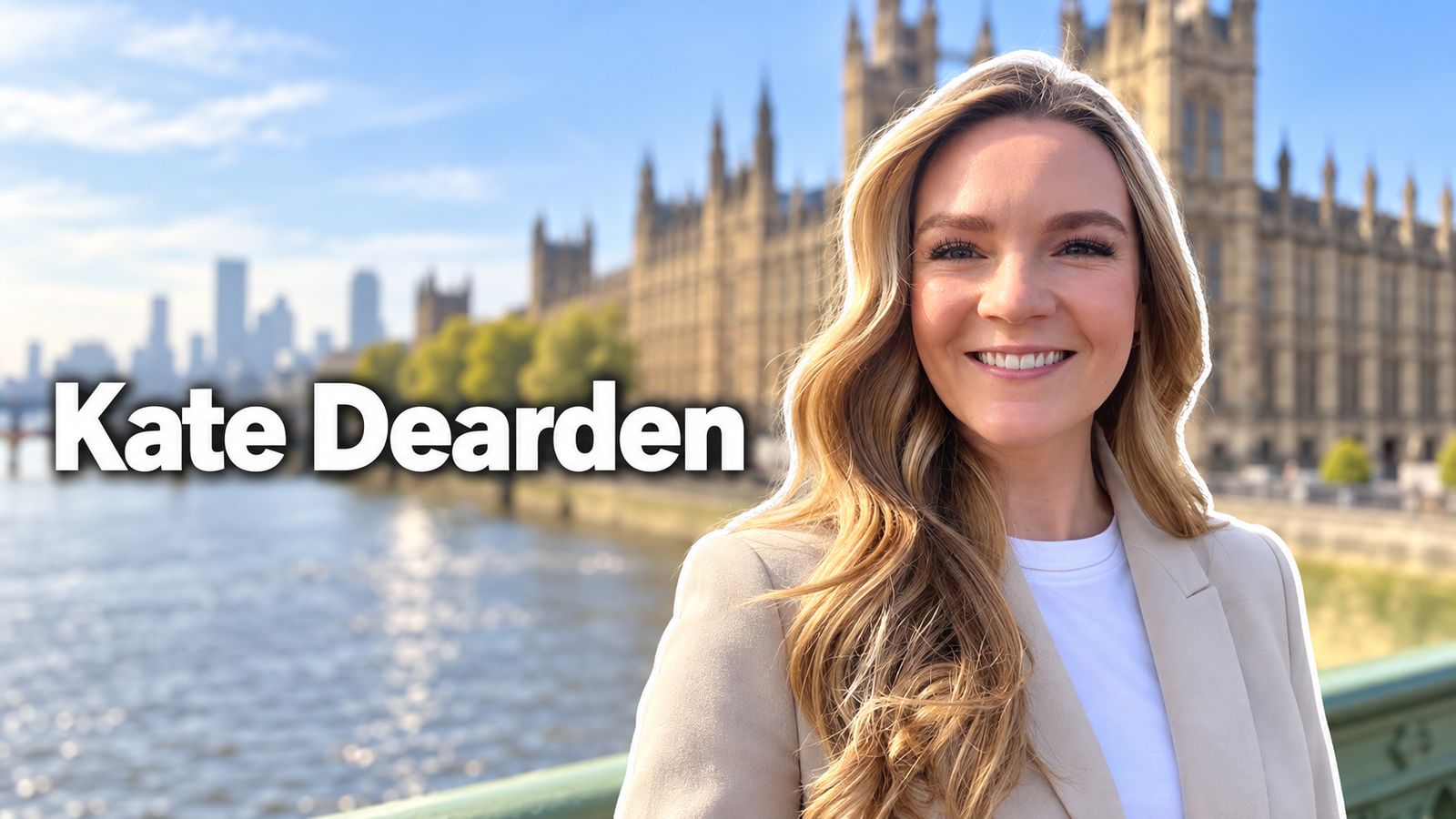
Kate Dearden’s Fast Rise From Trade Union Work to Government
The Halifax MP moved from employment-policy work into Parliament and soon took charge of a major government brief.

Introduction
Kate Dearden is a British Labour and Co-operative politician. She has served as the Member of Parliament for Halifax since July 2024.
Her rise was quick.
Within weeks of entering Parliament, she joined the Government Whips’ Office. She later became an employment-rights minister. As of September 2026, she is the UK’s Minister of State for the Future of Work.
Her work now covers workers’ rights, industrial relations, consumer protection, retail, product safety and the effect of artificial intelligence on jobs. That brief fits closely with her earlier career at the Community trade union.
Quick Facts
| Detail | Confirmed information |
|---|---|
| Full professional name | Kate Dearden |
| Profession | Politician and former trade-union policy worker |
| Political party | Labour and Co-operative |
| Constituency | Halifax |
| Became an MP | 4 July 2024 |
| Current position | Minister of State for the Future of Work |
| Appointed to current role | 21 July 2026 |
| Previous government post | Parliamentary Under-Secretary of State |
| First government position | Assistant Whip |
| Former employer | Community trade union |
| University | University of Edinburgh |
| Qualification | MA (Hons) in International Relations |
| Home region | West Yorkshire |
Who Is Kate Dearden?
She is the Labour and Co-operative MP representing Halifax in West Yorkshire. Voters elected her during the 2024 UK general election after the previous MP, Holly Lynch, stood down.
Her story is closely tied to work.
Before Westminster, she worked for Community, a trade union representing people from several industries. Her focus covered employment policy, fair pay, job security and working conditions.
That experience later became highly relevant. She now handles several of the government’s main workplace policies.
According to her official government profile, her brief includes the Make Work Pay programme, industrial relations, labour-market enforcement, parental leave and the effect of AI on workers.
Her West Yorkshire Background
She was born and raised in Bingley, West Yorkshire. Her official constituency profile describes her as coming from a hardworking family.
Growing up in the region gave her a direct connection with the communities she would later represent. Halifax and Bingley sit within the same wider part of West Yorkshire, though they are separate towns.
Her public career has stayed strongly linked to employment, local services and the problems working households face.
Claims about her exact birthday appear on some secondary websites. Yet her official government, Parliament and constituency profiles do not publish a full date of birth. For that reason, an exact age should not be stated as a confirmed fact.
Education at the University of Edinburgh
Dearden studied International Relations at the University of Edinburgh. She completed an MA with honours.
Politics became part of her life during those years. Reports connect her with Labour student organising and political campaigning in Scotland.
This period gave her early experience in public policy, campaigning and political communication. It also led into her later work with the Labour movement.
Details about every student position she reportedly held are not equally well documented. The degree itself, though, is confirmed by GOV.UK.
Work With Community Trade Union
Her trade-union career is one of the clearest parts of her professional story.
She worked for Community before becoming an MP. The union represents workers in areas such as steel, education and self-employment.
Her official Halifax profile says she worked on matters involving jobs, pay and workplace conditions. She later became Community’s Head of Research, Policy and External Relations.
That was a serious policy job.
In September 2022, the union identified her by that title when reporting her speech at the Labour Party Conference. She spoke about lifelong learning and the need to help workers adjust when industries and workplace skills change.
Her union work gave her practical experience of the issues behind employment law. She could see how national decisions affected people at work.
That connection still matters.
The 2022 Wakefield Selection
Her first widely reported attempt to enter Parliament came before the 2024 election.
In 2022, she sought Labour’s nomination for the Wakefield by-election. The party selected Simon Lightwood instead.
This point needs clear wording. She did not stand in the by-election itself, so it was not a public election defeat. Kate Dearden took part in Labour’s candidate-selection process but was not chosen.
Two years later, another opportunity arrived.
Becoming the MP for Halifax
Labour selected her to contest Halifax after Holly Lynch announced that she would leave Parliament.
The general election took place on 4 July 2024. Dearden won the seat for Labour and the Co-operative Party.
The UK Parliament record confirms that she has represented Halifax continuously since that date.
Her constituency includes Halifax and surrounding communities in Calderdale. As an MP, her local work has covered the cost of living, transport, public services, community safety and support for businesses.
Her official website also reports advice surgeries for residents dealing with financial pressure. It lists investment in health facilities and parts of Mixenden and Illingworth among her local priorities.
These are claims from her own constituency office, so an article should attribute them to that source rather than present every claim as an independent assessment.
An Immediate Government Appointment
Her first government appointment came very quickly.
On 18 July 2024, she became an Assistant Whip in the House of Commons. This happened only 14 days after she entered Parliament.
Whips help organise government business in the Commons. They also communicate with MPs and help manage votes.
The role usually attracts less public attention than a ministerial department. Still, it gave the new MP an early place within the government’s parliamentary team.
Kate Dearden remained an Assistant Whip until 7 September 2025.
Moving Into Employment Policy
In September 2025, she became Parliamentary Under-Secretary of State in the Department for Business and Trade.
The appointment placed her close to the policy area she knew from her union years. Her work centred on employment rights and consumer protection.
The Employment Rights Act 2025 became a major part of that brief. The law included changes involving sick pay, dismissal rights, trade-union access and insecure employment.
Many parts required later regulations or staged implementation. So, writers should avoid suggesting that every proposed workplace change took effect at once.
Her role included explaining the reforms, listening to employers and speaking with worker representatives.
Minister for the Future of Work
Another promotion followed.
On 21 July 2026, the government appointed her Minister of State for the Future of Work. This replaced her earlier Parliamentary Under-Secretary position.
The new title is her correct current role as of September 2026.
Her ministerial responsibilities cover:
- Employment rights and Make Work Pay
- Industrial relations
- Parental leave and pay
- Labour-market enforcement
- Consumer protection
- Competition policy
- Retail and hospitality
- Product safety
- Post Office and postal matters
- Artificial intelligence in the workplace
Kate Dearden also works with public bodies such as Acas, the Low Pay Commission, the Fair Work Agency and the Competition and Markets Authority.
It is a wide brief. Basically, it joins workplace rules with consumer and business policy.
Her Position on Workers’ Rights
Dearden has defended the government’s employment reforms against concerns raised by some employers.
In a June 2026 interview with The Guardian, she discussed the balance between flexibility and security. Some workers value flexible hours, but she argued that people should not face exploitative contracts that leave them unable to predict their working time or income.
Kate Dearden also spoke about possible rights for unpaid carers and the impact of AI on employment.
Her stated approach to AI was evidence-led. She wanted the government to examine how technology was changing real workplaces and whether it improved jobs or replaced workers.
Kate Dearden also supported Labour’s stated aim of reducing differences between minimum-wage rates for younger and older workers. The timing and rate-setting process remained linked to advice from the independent Low Pay Commission.
Work for Halifax
National office has not removed her constituency duties.
Her listed Halifax priorities include:
- Helping households with living costs
- Supporting small businesses
- Improving transport
- Tackling antisocial behaviour
- Making streets safer
- Protecting local services
- Seeking investment for health and community facilities
Kate Dearden has also submitted parliamentary questions about antisocial behaviour in Halifax.
That local focus matters because MPs hold two connected jobs. They represent their constituency, and some also carry government responsibilities.
Is Kate Dearden Married?
Reliable official sources do not publish details about a spouse or confirmed partner.
There is no need to guess.
Low-quality profile sites sometimes fill this gap with unsupported claims. Those details should be left out unless Kate Dearden makes them public or a trusted source reports them with clear evidence.
The same rule applies to children, parents and other relatives. Her public profile is based mainly on politics and employment policy.
Kate Dearden’s Net Worth and Salary
There is no trustworthy public record establishing her personal net worth.
Figures shown by generic wealth websites should not be copied. They rarely provide company filings, property records or other evidence that could support a sound estimate.
MPs and government ministers receive publicly set salaries. Yet salary information alone cannot establish someone’s wealth because it does not show savings, debts, assets or personal expenses.
The Independent Parliamentary Standards Authority publishes her office and parliamentary business costs. Those payments support her work as an MP. They are not personal earnings and should never be labelled as such.
Why Her Career Stands Out
Her route into government has a clear thread.
Kate Dearden studied international relations, worked in political campaigning, built experience in trade-union policy and then entered Parliament. Soon after, she received responsibility for employment law and workplace policy.
The speed is striking.
Kate Dearden went from a first-time MP to an Assistant Whip in two weeks. Roughly 14 months later, she entered a ministerial department. By July 2026, she held a Minister of State position.
Still, her public record remains fairly recent. Her longer-term influence will depend on how workplace reforms are put into practice and how she handles concerns from employees, unions and businesses.
Final Thoughts
Kate Dearden is best understood through her work on employment.
Her years at Community gave her a base in union research and workers’ rights. Her election for Halifax then took that experience into the House of Commons.
She rose fast. Very fast.
As Minister of State for the Future of Work, she now works on questions that affect millions of people: secure hours, workplace rights, pay, parental leave, consumer safety and AI at work.
That is why people search her name. She is a relatively new MP who has already gained a large government brief.
Frequently Asked Questions
Who is Kate Dearden?
Kate Dearden is the Labour and Co-operative MP for Halifax and the UK Minister of State for the Future of Work.
When did she become an MP?
Kate Dearden was elected as the MP for Halifax on 4 July 2024.
What is her current government position?
As of September 2026, she is Minister of State for the Future of Work.
Which political party does she represent?
Kate Dearden represents the Labour Party and the Co-operative Party.
Where did she study?
Kate Dearden studied International Relations at the University of Edinburgh and received an MA with honours.
What did she do before Parliament?
Kate Dearden worked for Community trade union and became its Head of Research, Policy and External Relations.
Is her exact age confirmed?
Her official government and parliamentary profiles do not provide a full date of birth, so an exact age should not be treated as firmly confirmed.
What is Kate Dearden’s net worth?
No reliable financial record establishes her personal net worth, so online estimates should not be presented as fact.


